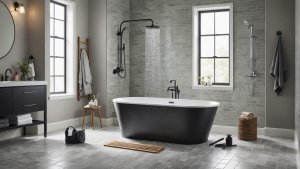
Not having a bathtub can indeed detract from a home’s value, especially among families and traditional buyers who consider this feature essential. While urban markets might show a preference for shower-only setups, over 50% of buyers still favor homes with at least one bathtub. This lack can limit your home’s appeal, making it less desirable in family-oriented neighborhoods. Additionally, homes featuring a master bathroom with both a bathtub and a shower tend to achieve higher resale values. Understanding local market dynamics and buyer preferences can provide further insights on this vital decision.
Buyer Profile Considerations

When considering the impact of a bathtub’s absence on home value, it is crucial to analyze the preferences of various buyer profiles. The bathtub resale value debate reveals that potential buyers’ demographics considerably influence the desirability of a property.
Families with young children often prioritize homes with at least one bathtub, as it serves practical needs and enhances comfort. Conversely, many home buyers prefer modern, streamlined bathroom designs, leading to a trend toward tub to shower conversions.
This shift is particularly evident in urban areas, where market demographics indicate a growing demand for shower-only setups. The Association of Home Builders highlights that younger buyers, including singles and couples, typically gravitate towards homes with walk-in showers, especially in ranch-style designs that appeal to seniors seeking safety and accessibility.
While the trend leans towards showers, the presence of a bathtub can still play a critical role in future resale value. Homeowners contemplating a bathroom renovation must weigh personal comfort against market trends to determine the best approach for retaining the value of a home.
Ultimately, the decision should align with the preferences of the target buyer profile to guarantee ideal market appeal.
Practical Factors to Evaluate
Evaluating practical factors is essential for homeowners contemplating bathroom renovations, particularly regarding the decision to install a bathtub or shower. The size of the bathroom plays a pivotal role in this decision; smaller spaces often benefit from space-saving shower installations that optimize functionality.
In urban markets, there is a growing trend towards modern bathrooms that favor shower-only designs, reflecting changing preferences among potential buyers.
Homeowners should also consider the cost-effectiveness of converting a tub to a shower. While this may enhance immediate usability, reinstating a bathtub later for resale could incur significant costs.
Additionally, accessibility improvements, such as walk-in showers, can add value, especially in markets with a large senior demographic, making them a selling point for aging homeowners.
Furthermore, the layout of the bathroom can impact resale value; a well-designed master bath that prioritizes functionality may favor showers in more contemporary spaces.
Ultimately, balancing modern aesthetics with practical considerations is vital for homeowners aiming to maximize both comfort and potential return on investment.
Market Dynamics

Understanding market dynamics is essential for homeowners weighing the implications of not having a bathtub in their property. Traditional real estate wisdom suggests that homes should retain at least one bathtub to optimize resale value, as over 50% of buyers prefer properties with both a shower and bathtub.
In family-oriented markets, where families with small children are prevalent, the absence of a bathtub can limit a home’s appeal considerably. Homes lacking bathtubs are often classified as having only three-quarter baths, which can detract from their overall value.
Local demographics play a vital role in shaping market dynamics; while some urban buyers may prioritize modern, shower-only bathrooms, many still value the presence of a bathtub, particularly in family-centric areas.
The National Association of Home Builders indicates that homes featuring a master bath with a tub are often more desirable, underscoring the importance of this feature.
Recent trends show that even as some new communities omit bathtubs due to perceived low interest, the overall presence of a bathtub remains a significant factor for many potential buyers.
Ultimately, the absence of a bathtub can negatively impact marketability and homes’ value in specific demographics.
Renovation Insights
Homeowners considering renovations in properties lacking bathtubs face an essential decision regarding bathroom functionality and market appeal. A growing trend in real estate indicates that many buyers prefer a master suite that features both a bathtub and a shower. Consequently, tub-to-shower conversions have become a popular renovation option, particularly in urban markets where large, walk-in showers are favored over traditional tubs.
While these conversions can enhance bathroom functionality and aesthetic appeal, homeowners must weigh the potential impact on home resale value. If future buyers desire a bathtub, the cost of reinstallation could offset initial savings from the renovation.
Additionally, accessibility improvements, such as walk-in showers, not only enhance safety but also appeal to aging homeowners, positively influencing market value.
To navigate these considerations, homeowners are encouraged to seek free in-home estimates from professional remodeling services. Firms like Envy Home Services specialize in tailored bathroom transformations, ensuring that renovations align with modern buyer preferences while maintaining the property’s overall market appeal.
Ultimately, strategic renovations can meaningfully impact a home’s desirability, making informed decisions vital for homeowners.
Trends and Buyer Preferences

The evolving landscape of buyer preferences reveals a complex relationship between bathroom features and market value, particularly regarding bathtubs. Current market trends indicate that over 50% of homebuyers still favor properties with at least one bathtub, underscoring its importance in the decision-making process.
While there is a growing demand for modern, spa-like bathrooms with spacious walk-in showers, many buyers prioritize the versatility a bathtub offers. Families, especially those with young children, often view bathtubs as essential for safety and practicality, further shaping buyer demographics.
This preference not only influences individual choices but also impacts the overall appeal of homes in the market. Reports demonstrate that homes equipped with a bathtub can achieve a resale value approximately $1,583 higher than those without, highlighting the financial implications of this feature.
Regional variations also play a significant role; urban buyers may lean towards shower-only setups, while suburban markets continue to value the inclusion of bathtubs for broader appeal.
Understanding these trends is vital for homeowners looking to maximize their property’s value and attract a diverse range of buyers.
Frequently Asked Questions
Does a House Lose Value Without a Bathtub?
In the intricate tapestry of real estate, a home devoid of a bathtub may indeed experience diminished allure, particularly among families. This absence can subtly erode market value, reflecting shifting buyer preferences and neighborhood dynamics.
Do Bathtubs Increase Home Value?
Bathtubs can considerably increase home value, as they enhance market appeal and cater to buyer preferences. Homes with bathtubs often command higher sale prices, particularly in family-oriented neighborhoods, emphasizing their importance in real estate transactions.
Is It Okay Not to Have a Bathtub in Your House?
Not having a bathtub in your house can feel like a missing piece in a puzzle; while some buyers may overlook it, many still prefer homes with at least one bathtub for versatility and family needs.
Do I Really Need a Bath in My House?
While a bathtub is not strictly necessary, it greatly enhances comfort and appeal for potential buyers, particularly families. Retaining at least one bathtub in your home can cater to diverse preferences and promote better resale value.